When a Dog Attacks a Florida Service Dog: Section 413.081 Penalties and Restitution
This page explains the law in general terms. It is not legal advice. For a specific situation, contact the agency listed on this site or an attorney.
Florida treats an attack on a service dog as a crime with a bill attached. Florida Statutes s. 413.081 makes reckless interference with a service dog a misdemeanor, makes intentional injury or killing a third degree felony, and requires restitution that includes retraining expenses and the handler's lost wages. This guide reads the statute and says where it stops.
What Does Florida Law Say About an Attack on a Service Dog?
Section 413.081 protects the service animal and its user. It reaches the person who interferes and also the person whose dog does. The statute uses the phrases "with reckless disregard" for some conduct and "intentional" for the most serious.
This is a criminal statute. Who is charged, and with what, is for prosecutors and courts, not the handler. Nothing in this guide predicts an outcome.
What Counts as Interference?
The statute's words are "obstructing, intimidating, or otherwise jeopardizing the safety of the service animal or its user." The mental state is "reckless disregard," which is stricter than an accident. It is not a statute about every close call.
Reasoning: examples that could fit those words include blocking a handler's path on purpose, or letting a dog run at a leashed service dog. Whether a given event meets the statute is for a prosecutor and a court. A handler's job is to keep notes and keep the dog safe.
How Does Florida Classify the Conduct?
| Conduct | What the statute says | Classification |
|---|---|---|
| Interfering, first offense | With reckless disregard, interferes with the use of a service animal "by obstructing, intimidating, or otherwise jeopardizing the safety of the service animal or its user," or permits a dog he or she owns or controls to do so | Second degree misdemeanor |
| Interfering, later offenses | Same conduct | First degree misdemeanor |
| Injuring or killing, reckless | Reckless disregard injury or killing, or permitting one's dog to do so | First degree misdemeanor |
| Injuring or killing, intentional | Intentional injury or killing, or permitting one's dog to do so | "A felony of the third degree" |
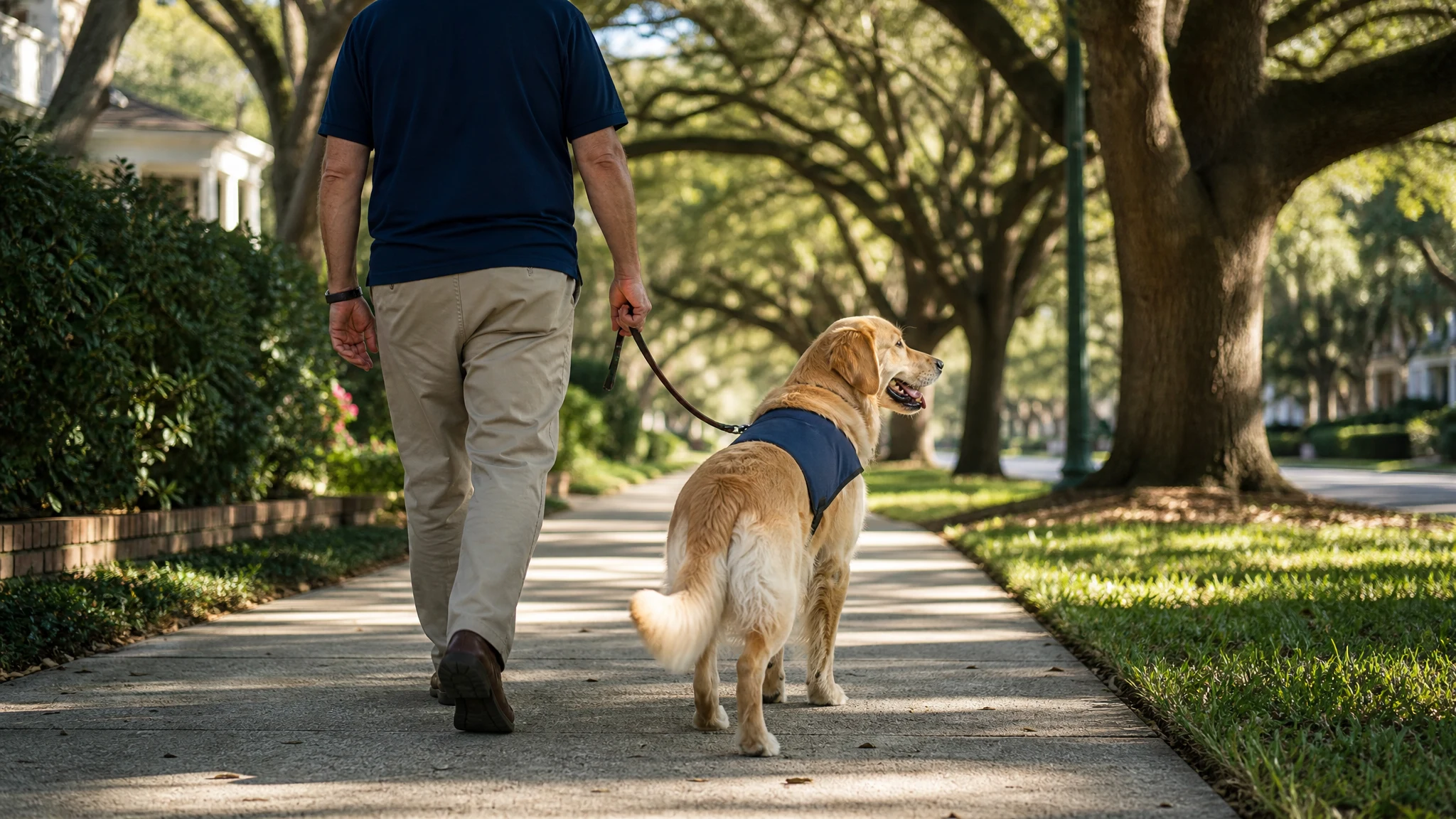
The second and fourth rows matter for a neighborhood walk. A loose dog charging a leashed service dog can fall under "permits a dog he or she owns or controls to interfere," which puts the owner's own supervision in the statute.
What Restitution Does Florida Require?
Section 413.081(4) says a person convicted "must make full restitution for all damages." Subsection (4)(b) names the items:
- Value of the service animal. The statute lists the animal's value and replacement.
- Training. Training or retraining expenses for the animal and for the user.
- Animal care. Veterinary and other medical and boarding expenses for the animal.
- User costs. Medical expenses for the user.
- Lost income. Lost wages or income during any period the user is without the animal.
The retraining item is the one many handlers do not expect. A service dog that is hurt or frightened may need to be retrained, and the statute counts that cost. For a handler whose dog was still being trained for psychiatric tasks, that can include an organized route for building psychiatric service dog skills after a veterinarian clears the dog to work.
Whether any particular cost is awarded is for the court. The statute lists what restitution may include.
What Should a Handler Do After an Attack?
These steps are this guide's suggestion, not legal advice.
- Get the dog to a veterinarian. Health questions about the dog belong with a veterinarian, and the records matter later.
- Write down the date, time, place and what was said. Photograph the scene and the injuries.
- Collect names and numbers of witnesses.
- Report it to local law enforcement, since the statute is criminal.
- Keep receipts for veterinary care, training and any time away from work.
Reasoning: restitution under (4)(b) refers to expenses and lost income, so a clear paper trail makes it easier for a court to count them. An attorney can advise on a civil claim, which is beyond what this guide covers.
How Is This Different From a Denial of Access?
Section 413.081 is about harm or interference with the animal and its user. Section 413.08(4) is about a business or person that "denies or interferes with admittance to, or enjoyment of, a public accommodation," which is also a second degree misdemeanor. The two statutes sit side by side. Florida's base rules are in what Florida law adds to the ADA.
Pretending to have a service dog is a separate offense in section 413.08(9), covered in Florida's law on misrepresenting a service dog.
Where Can Attacks Happen in Florida?
The statute is not limited to a place.
A Florida handler may meet a loose dog on a sidewalk, in a parking lot or on public land.
The Florida State Parks pet policy, as read from a saved copy dated September 26, 2026, sets leash rules for pets and says service animals are allowed in all public areas of the park. A handler in a state park will therefore share the grounds with pets. See service dogs in Florida state parks.
If an agency or business was involved, where to file a service dog complaint in Florida names the routes.
A handler cannot control another owner's dog. Knowing what the statute lists is still useful, because it tells you what to keep records of.