Hurricane Season Training Calendar for a Florida Service Dog Team
This page explains the law in general terms. It is not legal advice. For a specific situation, contact the agency listed on this site or an attorney.
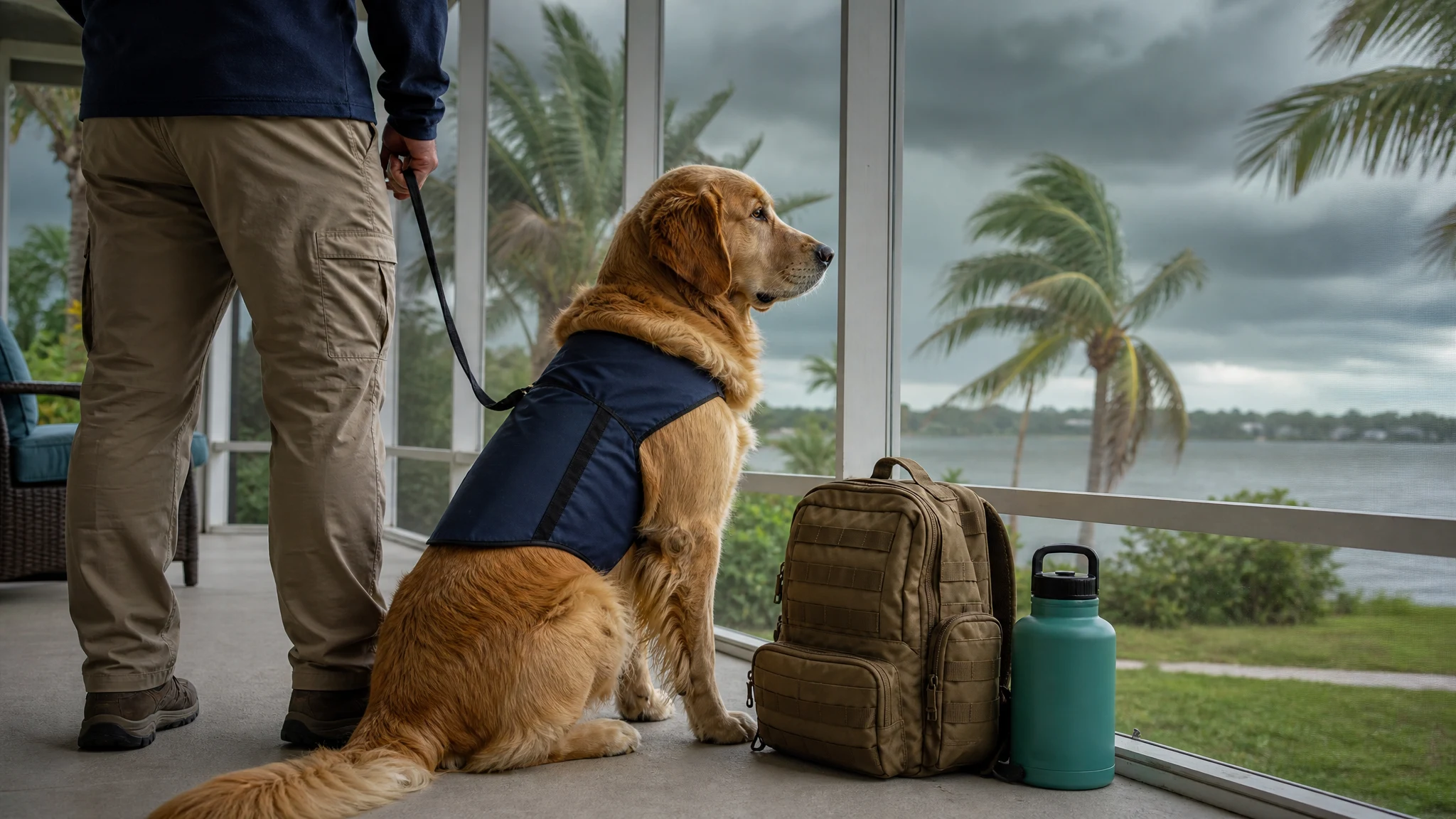
A Florida service dog team should treat hurricane season as a training calendar, not a surprise. The Atlantic season runs June 1 to November 30, and the peak falls between mid-August and late October. This guide pairs sourced Florida facts with labeled training steps so a handler can rehearse an evacuation before a storm is named.
How Long Is Hurricane Season Service Dog Training in Florida?
The National Weather Service says the Atlantic season "runs from June 1 to November 30 each year." The Florida Climate Center at Florida State University, a public university, says the peak occurs between mid-August and late October.
That gives a handler three working stretches: June and July for setup, August through October for rehearsal and readiness, and November for review. Every training suggestion below is this guide's reasoning, not a state rule. A dog's health or behavior concern belongs with a veterinarian.
What Do the Watch and Warning Times Mean for Your Dog?
The National Weather Service says the National Hurricane Center issues hurricane watches 48 hours before it expects tropical storm-force winds, and a warning 36 hours in advance. A watch means hurricane conditions are possible. A warning means they are expected.
Reasoning: if a watch is your signal to start loading the car, then any skill your dog needs for the trip, such as settling in a crate or on a mat in a new room, has to be finished before the watch arrives.
A Florida Month-by-Month Calendar
NOAA 1991-2020 climate normals give the rain side of each month. They are averages, not forecasts. The training column is reasoning.
| Month | Sourced Florida fact | Training suggestion (reasoning) |
|---|---|---|
| June | Season opens June 1. The Miami area record averages 10.5 inches of rain in June. | Build a go-bag routine: pack it with the dog watching, then reward calm. |
| July | The Pensacola area record averages 7.89 inches in July. | Practice loading the car and settling on a mat in a new room. |
| August | The Tampa-area record averages 9.03 inches in August. The peak begins mid-month. | Rehearse a full "evacuation morning" at home, leash and vest included. |
| September | The Miami area record averages 10.22 inches. | Add distraction work: wind noise, strangers, unfamiliar floors. |
| October | The peak runs through late October. The Miami area record averages 7.65 inches. | Practice long waits in a crowded room with the dog on a mat. |
| November | The season ends November 30. | Review what worked, restock the kit, and note the next steps. |
What Should the Evacuation Plan Cover?
The Florida Division of Emergency Management asks households to make a plan, learn their evacuation zone, build a supply kit "to last you at least 7 days" and register for local alerts. It also asks people who need electricity for medical equipment, transportation because of a medical condition or help getting medication to register with the Special Needs Registry.
For the dog, the state's pet page suggests a kit with medications and records in a waterproof container, sturdy leashes, a photo of you with your dog, food and water. It says to keep dogs securely leashed outside the home and in the car, because animals "react differently under stress."
A service dog's right to a special needs shelter comes from the statute covered in the special needs shelter guide. Which county shelter you land in is the county's decision.
A Training Sequence for Shelter Life
This progression is reasoning, built around reward-based methods only. Veterinary behavior guidance supports reward-based training, and nothing here calls for shock, prong or choke collars or dominance methods.
- Teach a mat or crate settle at home with food rewards for staying calm.
- Move the mat to a new room, then to a car, then to a borrowed community space.
- Add short noises, such as a radio at low volume, and reward the dog for staying settled.
- Practice tidy handling of food, water and relief breaks on a schedule, since shelter staff are not responsible for caring for your dog.
- Keep sessions short, and stop if the dog shows stress. A dog that cannot settle after repeated sessions should see a veterinarian, and an aggressive dog needs a veterinarian plus a certified behavior professional.
If the dog is learning psychiatric tasks, guided coursework in psychiatric service dog skills can sit alongside this calendar. The shelter rehearsals matter most for those dogs, because a crowded room can strain a handler as much as the dog.
What Does the Storm Itself Add?
Lightning and wind arrive with Florida's summer storms long before a named hurricane does. The Florida Climate Center says "no other part of the nation has more thunderstorm activity than Florida." For noise work, see thunder-proofing a Florida service dog.
Beach handlers face a second calendar that overlaps this one, because nesting season shapes where a dog can train. That is covered in the sea turtle nesting season guide.
For the base skills the calendar builds on, start with how to owner-train a service dog in Florida.
A calendar does not make a storm safe. It makes the rehearsal familiar, so a handler's attention can go to the road, the shelter and the dog.
Sources
- National Weather Service, hurricane safety
- National Weather Service, hurricane watches and warnings
- Florida Climate Center, hurricanes
- Florida Climate Center, thunderstorms
- Florida Division of Emergency Management, Plan & Prepare
- Florida Division of Emergency Management, Make a Pet Plan
- NOAA 1991-2020 climate normals for Miami, Pensacola and Tampa area records (ACIS, data.rcc-acis.org)