Sea Turtle Nesting Season and Your Service Dog: A Florida Beach Training Calendar
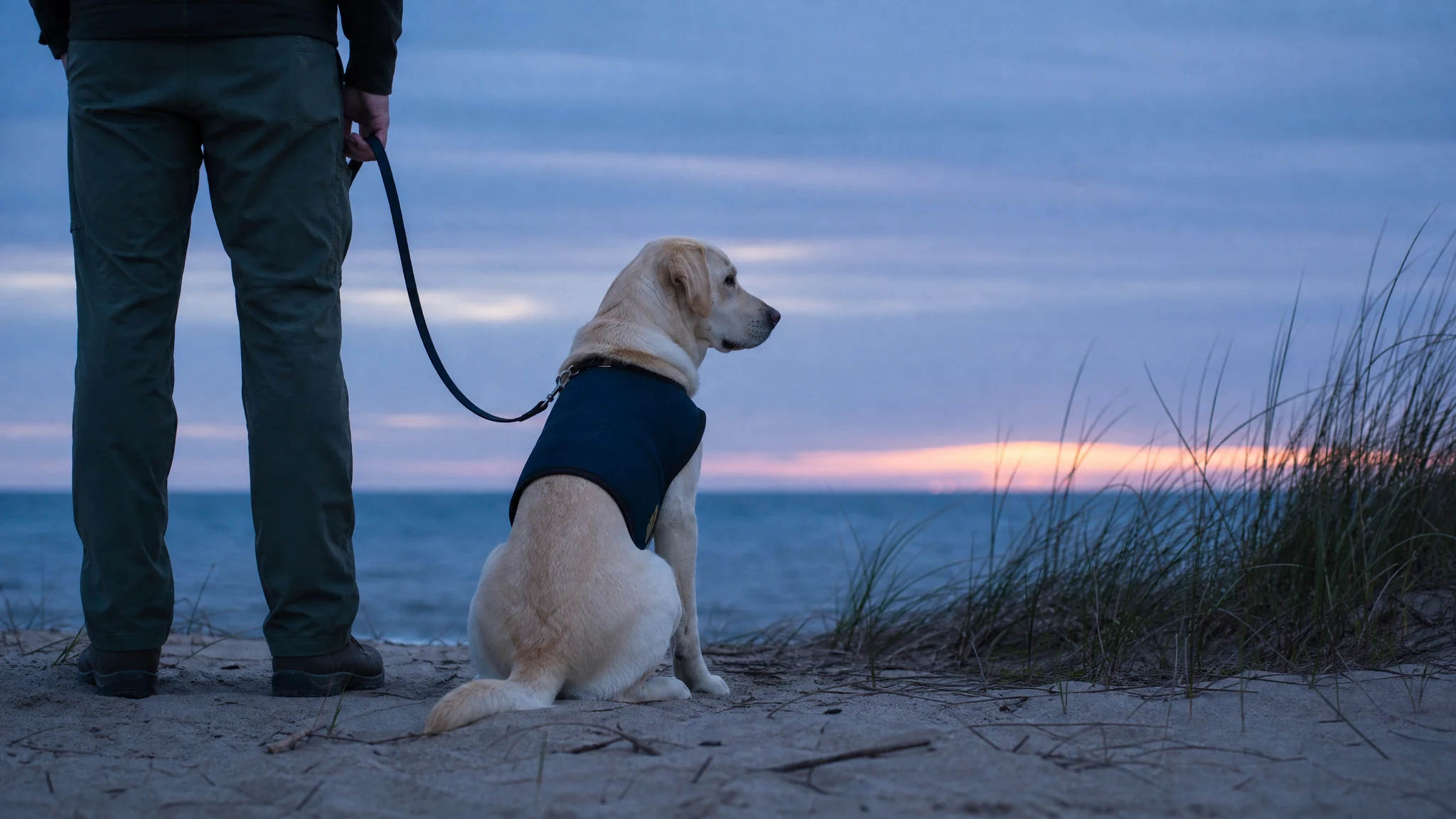
This page explains the law in general terms. It is not legal advice. For a specific situation, contact the agency listed on this site or an attorney.
Sea turtle nesting season in Florida changes when and how a service dog team should train on a beach. The Florida Fish and Wildlife Conservation Commission (FWC) says nesting starts in March on the southeast Atlantic coast and in April or May on the Gulf and north Florida beaches. This guide turns those dates into a training calendar.
When Does Sea Turtle Nesting Season Start for Your Service Dog?
FWC's March 17, 2026 nesting season release says turtles typically return to nest in March along Florida's southeast Atlantic coast from Brevard County south to Broward County. It says nesting begins on the Gulf Coast and north Florida beaches in April or May.
FWC's July 1, 2026 Share the Beach release says nesting season is still underway for sea turtles, shorebirds, seabirds and wading birds. No end date was found in the sources read for this guide, so none is given here. Ask FWC or the beach's managing agency for the dates that apply to your stretch of coast.
A Seasonal Calendar for a Beach-Training Team
The sourced facts sit in the middle columns. The last column is this guide's reasoning about training, not an agency rule.
| Period | Atlantic coast, Brevard to Broward | Gulf and north Florida beaches | Training suggestion (reasoning) |
|---|---|---|---|
| March | Turtles typically return to nest | Nesting has not yet begun, per FWC | Practice calm settles and a short leash on a quiet inland path |
| April and May | Nesting underway | Nesting begins | Work on "leave it" for birds and crabs away from the beach |
| Summer | Nesting season still underway per FWC's July 1 release | Same | Keep sessions short and at times with little foot traffic |
| After the season ends | Dates not sourced here | Dates not sourced here | Ask the managing agency before returning to evening sessions |
What Does FWC Ask Beachgoers to Do?
FWC says it is illegal to harm or disturb nesting sea turtles, their nests or eggs, or to handle hatchlings. It asks people to use flashlights or cellphones on the beach at night only when necessary, to give wildlife plenty of space (50 feet or more), to remove all beach toys and furniture before dark, and to fill in man-made holes.
For a service dog team, the practical reading is plain. A dog on a beach at night should not wear a bright light, and a handler should not dig or leave gear behind. These are FWC's requests to every visitor, and nothing in the releases read exempts a team.
Why Even a Well-Trained Dog Counts as a Predator to Birds
An FWC release from June 29, 2023 says: "Even friendly dogs can be seen as predators by shorebirds, which can cause them to flush and leave their eggs and chicks." It advises keeping dogs at home or on a short leash and far away from wildlife at pet-friendly beaches.
A service dog's calm manner does not change how a bird sees a dog-shaped animal. That is reasoning, but it follows from FWC's own sentence. The training goal is distance and attention: the dog keeps its focus on the handler while the birds go about their day.
Which Beaches Even Allow the Dog?
Not every Florida beach lets a working dog onto the sand at all. Canaveral National Seashore bars pets from its beach, while Port Canaveral's Jetty Park names trained service animals as an exception. The comparison of Canaveral, Gulf Islands and Jetty Park sets out what each page says.
Jetty Park's page says the beach and pier close at 9:00 PM and lifeguards are on duty from 10:00 AM to 5:00 PM. That makes it a daytime site for a team, and most nesting-sensitive work happens when light is low. Plan evening training on private ground or an inland path instead.
Parking is its own hazard. Canaveral National Seashore says inside car temperatures can reach 120 degrees in a matter of minutes, even with partially opened windows. A dog should not wait in the car while you scout a beach.
A Four-Step Beach Training Progression
This is reasoning, and it uses reward-based methods only. A dog with fear, aggression or a health problem should see a veterinarian, and an aggressive dog needs a veterinarian plus a certified behavior professional.
- Start away from wildlife. Practice settling on a mat in a quiet yard.
- Add distance cues. Reward the dog for choosing to look at you when a bird lands.
- Add sand. Practice on a day when the beach is quiet and the managing agency allows the dog.
- Leave before the dog tires. A short, calm success is the goal, and a tired dog loses focus.
The step-by-step owner-training plan puts this kind of session into a longer plan. For a handler who is building psychiatric tasks, a lesson-based path to psychiatric task skills can be one part of that plan.
Other Seasons That Overlap
Nesting overlaps with hurricane season, which runs June 1 to November 30. The hurricane season training calendar lists what the state and the National Weather Service say about preparing. Summer also brings the heat covered in the city-by-city heat walking plan.
A beach day has more than one hazard at once. A calendar helps because it lets a handler see nesting, heat and storms together instead of one at a time.