Florida Heat and Hot Pavement: A City-by-City Walking Plan for Service Dog Training
This page explains the law in general terms. It is not legal advice. For a specific situation, contact the agency listed on this site or an attorney.
A service dog handler in Florida plans training walks around heat for most of the year. NOAA normals put Tallahassee at 102.6 days a year with a high of 90 F or more, Orlando at 109.9 and Fort Myers at 121.0. This guide shows those numbers by city, with walking suggestions marked as reasoning.
How Hot Are Five Florida Cities?
The numbers below are NOAA 1991-2020 climate normals, computed from daily station data. They are 30-year averages for each city's area record, not forecasts and not a statement about any single year.
| City | Days a year at 90 F or more | June average high (F) | July average high (F) | August average high (F) |
|---|---|---|---|---|
| Tallahassee | 102.6 | 91.4 | 92.7 | 92.1 |
| Orlando | 109.9 | 90.7 | 91.9 | 91.6 |
| Fort Myers | 121.0 | 91.1 | 91.5 | 91.6 |
| Miami | 91.4 | 89.4 | 90.8 | 90.9 |
| Jacksonville | 80.1 | 89.9 | 91.9 | 90.7 |
The pattern is flat.
Summer highs sit within about four degrees of each other from the Panhandle to Fort Myers. What changes is how many days a year reach 90, and Fort Myers has the most of these five. The cold side exists too: the Tallahassee area record averages 27.0 days a year with a low of 32 F or below, while Miami averages none.
What Does the Heat Index Add for a Service Dog in Florida?
The University of Florida's extreme heat page says "When the heat index reaches 105° F, or higher, conditions can become dangerous for both people and pets." It describes the National Weather Service Heat Advisory as generally a heat index of 100 F or higher for at least 2 days with nighttime air temperature not dropping below 75 F.
Heat index combines air temperature and humidity. The NOAA table above gives air temperatures only, so it understates how hot a humid afternoon feels. No dog-specific temperature threshold was sourced for this guide, and none is given.
How Do You Test Pavement?
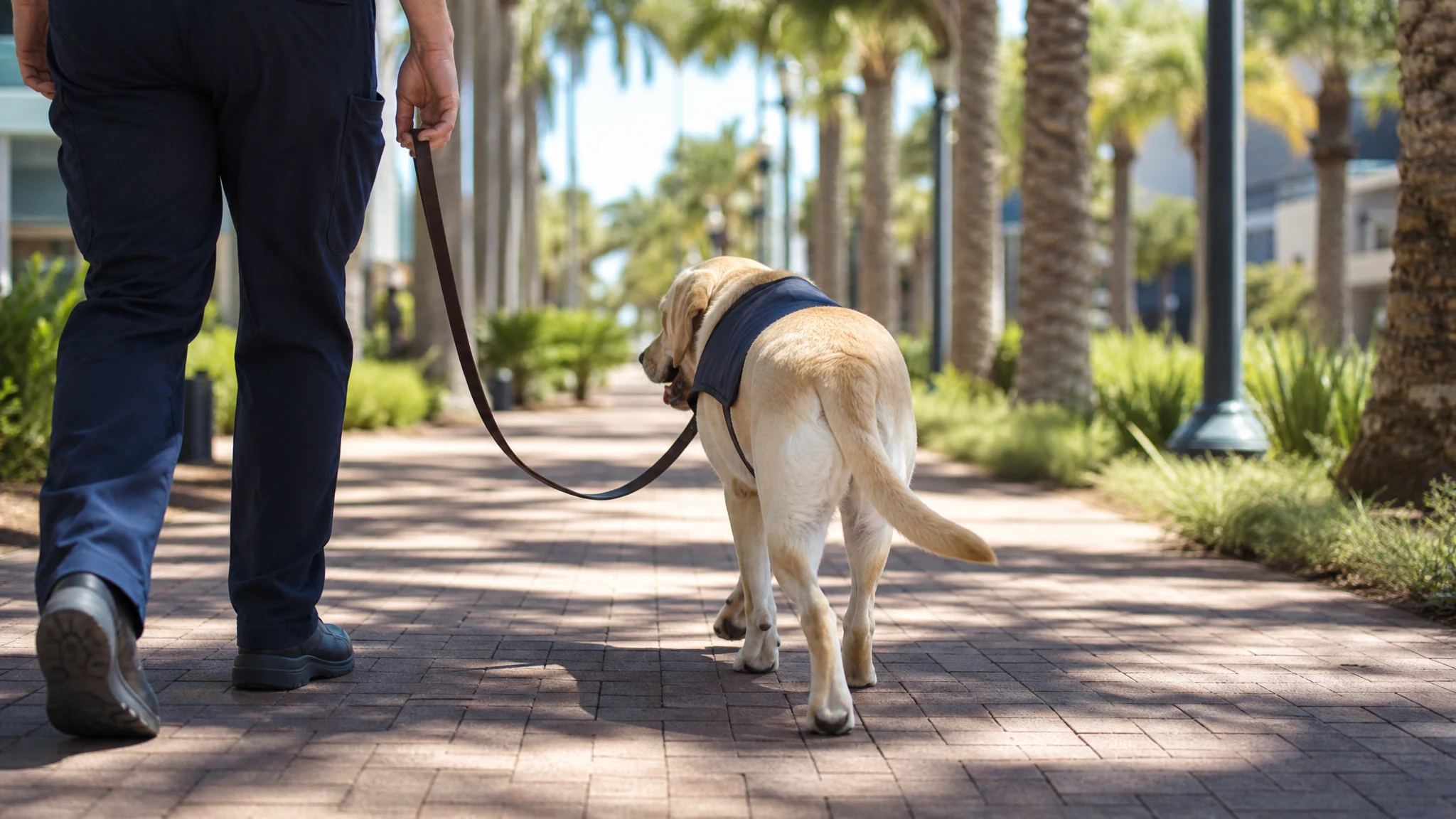
The National Weather Service says: "Place the back of your hand on the asphalt - if it's too hot for you, it's too hot for them."
It also says hot asphalt or cement can easily burn an animal's paws, so try to minimize walking your pet during the hottest part of the day. That article is a general NWS piece, not a Florida page.
This test costs nothing and needs no number. A handler can repeat it on every surface the dog will touch, including brick sidewalks and parking lots.
What About the Car?
Several Florida parks speak to this directly. Big Cypress National Preserve says car temperatures rise quickly in the sun, even on cool days, and recommends not leaving pets in the car at all when temperatures are above 68 degrees.
Canaveral National Seashore says inside car temperatures can reach 120 degrees in a matter of minutes, even with partially opened windows.
Biscayne National Park says leaving pets inside a parked car is considered animal cruelty per Florida law.
A service dog is not a pet in the ADA's terms, but the car is no safer for it. These are park statements, not veterinary advice.
A Walking Plan by City
Everything in this section is reasoning built on the sourced numbers above. A veterinarian can advise on your dog's health and heat tolerance.
- Tallahassee. With 102.6 days a year at 90 F or more and highs near 92 F in summer, schedule training for the early morning and keep afternoon sessions indoors.
- Orlando. With 109.9 days at 90 F or more, plan the same pattern and use shaded parking.
- Fort Myers. With 121.0 days at 90 F or more, expect to modify walks for more of the year than in the other cities.
- Miami. With 91.4 days at 90 F or more and an average June low of 76.3 F, nights stay warm, so test the pavement after dark too.
- Jacksonville. With 80.1 days at 90 F or more, the hot season is shorter, so winter and spring give more room for longer sessions.
What Should Training Look Like in the Heat?
Short sessions, shade and water. A dog can practice settling, loose-leash walking and "leave it" on a mat under a tree just as well as on a long walk.
Reward-based training only applies in the heat as it does in any season. If a dog lags, pants hard or refuses to move, stop and cool it down, and call a veterinarian if you are worried. A handler building psychiatric tasks can read about our psychiatric service dog training program and choose indoor sessions for the hottest weeks.
Heat Is Not the Only Summer Hazard
Afternoon storms arrive on the same days as the heat, which is why the thunder-proofing guide belongs beside this one. The hurricane season calendar shows how June through November lines up.
Near water, the alligator walking guide says to avoid the water's edge, especially at dusk and dawn. Hot afternoons and dusk walks can be the same walk, so plan the route first.
The Everglades and Big Cypress guide covers what those parks say about leashes and trails.