Red Tide and Blue-Green Algae: A Service Dog Handler's Water Checklist for Florida
This page explains the law in general terms. It is not legal advice. For a specific situation, contact the agency listed on this site or an attorney.
A service dog handler in Florida should treat a harmful algal bloom as a reason to change the route. The Florida Department of Health (FDOH) says blooms usually happen in summer or early fall and that pets can become sick, sometimes before people. This checklist follows what FDOH and the Florida Fish and Wildlife Conservation Commission (FWC) say.
What Do Red Tide and Blue-Green Algae Mean for Dog Safety in Florida?
They are two different problems. The FDOH aquatic toxins page says the Department of Environmental Protection and partners sample freshwater for blue-green algae, while FWC samples and tests marine waters for red tide.
FWC's red tide page says the species that causes most red tides is Karenia brevis, and it offers a daily sample map and a current status report. Blue-green algae are cyanobacteria in fresh water, and FWC covers them on a cyanobacteria page.
No pet-specific red tide page was read for this guide, so it does not list red tide symptoms in dogs. Ask a veterinarian.
When Is the Risk Highest?
FDOH's harmful algal bloom page says "HABs usually happen in summer or early fall." That overlaps the hottest months, so a dog may be tempted to wade at exactly the wrong time.
The same page says pets can become sick from blue-green algae, so keep them out of those areas and away from contaminated marine animals and fish. It also says animals "can exhibit effects of toxin exposure before humans."
The Checklist
Each item names the agency that says it. Items marked reasoning are this guide's suggestions.
Before the walk
- Check the map. FWC offers a daily red tide sample map and a current status report.
- Pick a dry route. Reasoning: a path away from the water's edge avoids the question.
- Pack water and a towel. Reasoning: fresh water for the dog and a way to rinse fur.
At the water
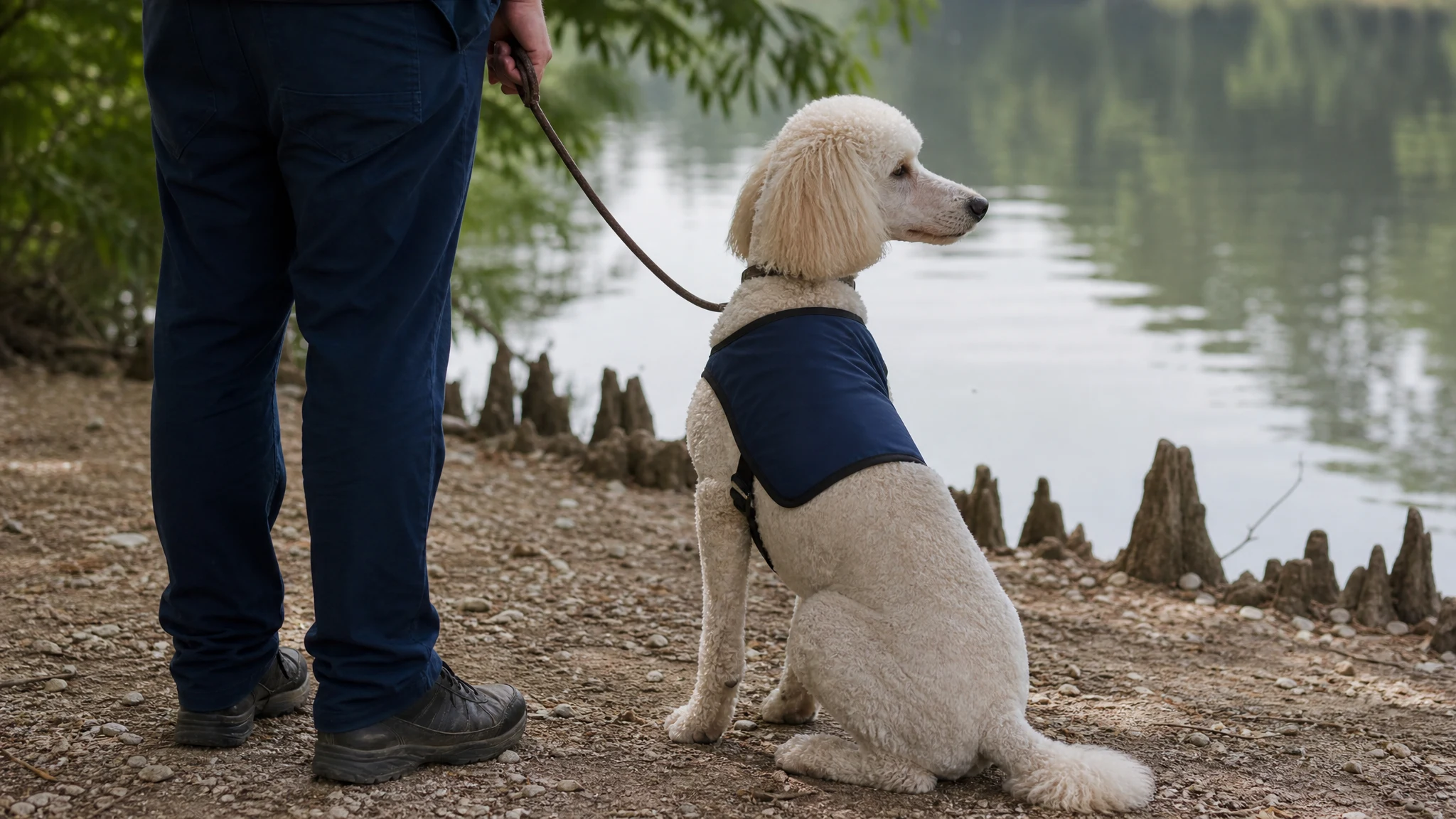
- Skip scummy water. FWC says not to allow pets or children to swim in, drink from, or play near scummy water.
- Keep the dog off dead fish. FDOH says to keep pets away from contaminated marine animals and fish.
- Hold the leash. Reasoning: a dog that drinks from a pond needs a handler who can step back.
After the walk
- Rinse right away. FWC says to wash off immediately and thoroughly with clean water and soap, including the swimsuit areas and your pet's fur.
- Watch the dog. FWC says to contact a veterinarian if a pet suddenly becomes lethargic or shows signs of poisoning including vomiting, diarrhea, or seizures.
Who Do You Call?
The first call for a sick dog is a veterinarian. The agencies on these pages cover the water, not your dog's health, and this guide does not give medical advice.
Keep a number saved before the summer starts. A handler with a psychiatric disability may want a plan for who watches the dog and who drives, because a sick dog and an anxious day can arrive together.
Questions Florida Handlers Ask About Algae
Who Tests Florida's Water?
FDOH says the Department of Environmental Protection and partners sample freshwater for blue-green algae. FWC samples and tests marine waters for red tide.
When Do Blooms Usually Happen?
FDOH says harmful algal blooms usually happen in summer or early fall.
What Should I Do After My Dog Touches Scummy Water?
FWC says to wash off immediately and thoroughly with clean water and soap and to rinse your pet's fur. Contact a veterinarian if the dog suddenly becomes lethargic or shows signs of poisoning, including vomiting, diarrhea or seizures.
What Does This Mean for a Working Dog's Routine?
A service dog on duty goes where the handler goes, which includes lake paths, boat ramps and beaches. The ADA does not turn off because the water is unsafe, and it does not make the water safe.
So the work falls on the handler. The walking plan for alligators and water applies the same short-leash rule to ponds and canals, and the sea turtle nesting calendar shows when beaches are busy with wildlife.
Training the Dog Not to Drink From Water
This section is reasoning, and it uses rewards only. Teach "leave it" at a distance from any water, pay the dog for looking at you, and move closer in small steps. A dog that drinks from every puddle is practicing a habit, and a handler can interrupt it early.
If your dog has a history of eating things or has a health problem, ask a veterinarian. For a handler still building psychiatric task skills, a structured way to learn psychiatric service dog tasks can sit alongside this kind of daily habit work.
Heat, Water and Timing
Blooms and summer heat arrive together. The city-by-city heat walking plan puts NOAA normals beside the University of Florida's heat index language, and the comparison of beach pages for Canaveral, Gulf Islands and Jetty Park shows where a beach is open to a working dog at all.
A handler who plans the route, rinses the dog and keeps a veterinarian's number close has done most of what these agencies ask. The rest is paying attention.
One more habit helps: check the FWC red tide map before any coastal trip, and check the Department of Health page before a lake day. Both agencies publish current information, and a bloom can change from one week to the next, so an old plan may not fit today's water.